Why Communication Skills Matter More Than CGPA
5/31/2026, 7:07:23 AM

Every year, thousands of students worry about their CGPA. Many believe that a higher CGPA automatically guarantees a great job, a successful career, and better opportunities. While academic performance is important, the reality of today's professional world is very different.
Companies are not only looking for people who can score well in exams. They are looking for individuals who can communicate ideas clearly, work effectively with teams, solve problems, interact with clients, and contribute to business goals.
This is where communication skills become a game changer.
A student with an average CGPA but excellent communication skills often has a better chance of succeeding in interviews and workplace environments than someone who has outstanding grades but struggles to express their thoughts.
Let us understand why communication skills matter more than CGPA and how they can significantly impact your career.
Understanding the Difference Between CGPA and Communication Skills
CGPA reflects your academic performance. It shows how well you performed in exams and assignments throughout your course.
Communication skills, on the other hand, represent your ability to:
- Express ideas clearly
- Listen effectively
- Present information confidently
- Collaborate with others
- Build professional relationships
- Handle discussions and negotiations
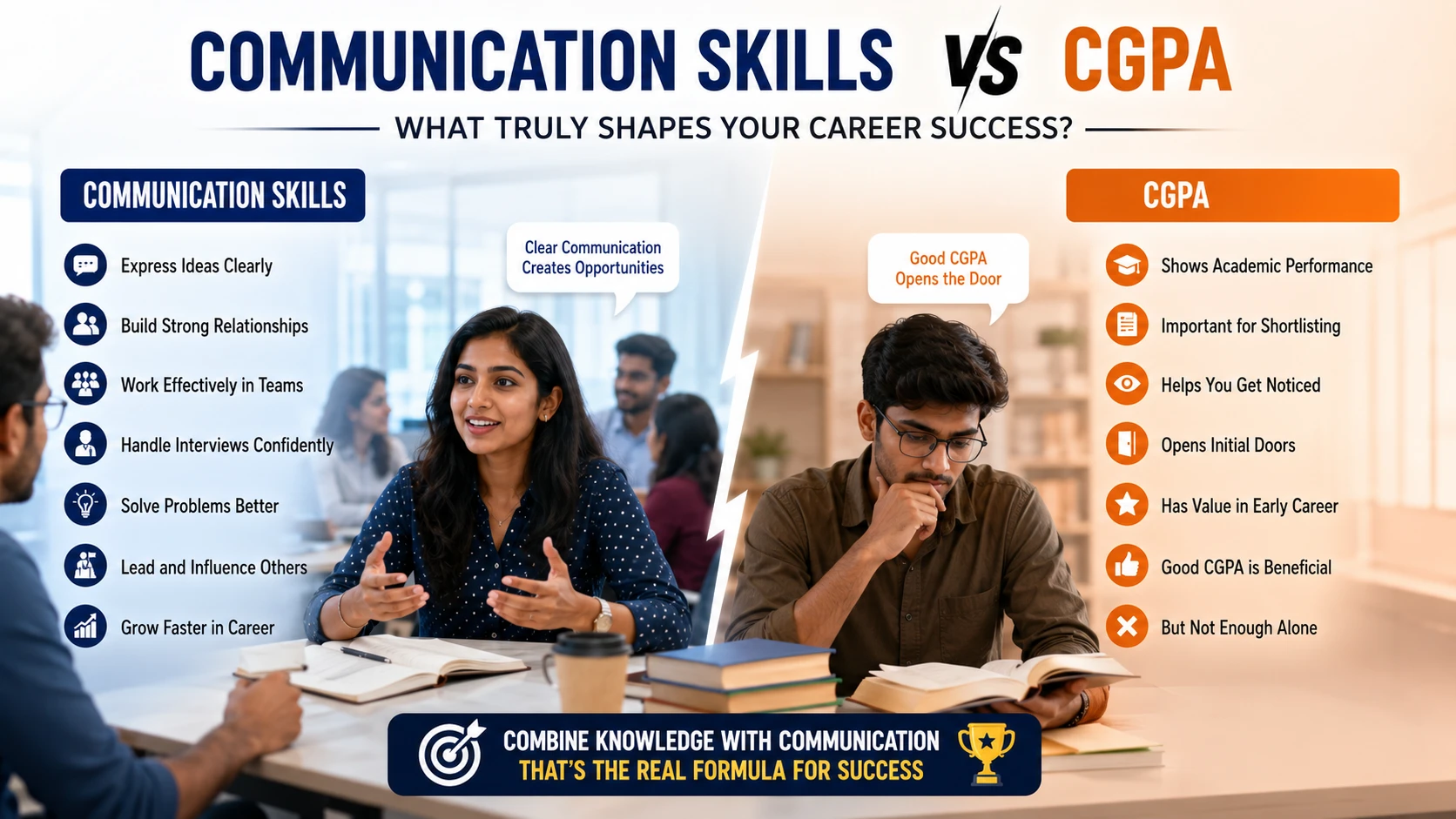
While CGPA measures academic success, communication skills determine how effectively you can apply your knowledge in real-world situations.
Employers need both, but communication often plays a bigger role in daily work life.
Why Companies Value Communication Skills So Much
Most jobs require interaction with people.
Whether you are a software developer, data analyst, marketing executive, engineer, designer, or business consultant, your work will involve communication in some form.
You may need to:
- Explain technical concepts
- Participate in meetings
- Discuss project requirements
- Write emails
- Present reports
- Collaborate with teams
- Talk to clients
If you cannot communicate effectively, even strong technical knowledge may not create the desired impact.
Companies understand this reality, which is why recruiters frequently evaluate communication skills during interviews.
Communication Skills Help You Clear Interviews
Many students focus entirely on technical preparation and ignore communication.
Imagine two candidates:
Candidate A has a CGPA of 9.5 but struggles to answer questions confidently.
Candidate B has a CGPA of 7.2 but communicates clearly, maintains eye contact, explains projects well, and interacts professionally.
In many cases, Candidate B creates a stronger impression.
Interviews are not just about giving correct answers. They are about demonstrating confidence, clarity, and professionalism.
Recruiters often ask questions such as:
- Tell me about yourself.
- Describe your project.
- What challenges did you face?
- Why should we hire you?
Strong communication skills help candidates answer these questions effectively and stand out from the competition.
The Workplace Is Built on Communication
College exams test individual performance.
Professional environments are different.
Most projects involve teamwork.
You will need to coordinate with managers, colleagues, clients, and stakeholders. Even highly technical roles require regular communication.
A software developer may need to explain features to a product manager.
A data analyst may need to present findings to senior leadership.
A designer may need to discuss user experience improvements with developers.
Success in these situations depends heavily on communication skills.
People who communicate effectively often become valuable team members and future leaders.
Leadership Requires Strong Communication
Many professionals start their careers in technical roles.
As they gain experience, they move into positions such as:
- Team Lead
- Project Manager
- Product Manager
- Engineering Manager
- Department Head
At higher levels, communication becomes even more important.
Leaders spend a significant amount of time:
- Conducting meetings
- Motivating teams
- Resolving conflicts
- Presenting strategies
- Making decisions
- Communicating goals
Without strong communication skills, leadership becomes extremely difficult.
This is one reason why many organizations prioritize communication abilities when identifying future leaders.
Communication Builds Professional Relationships
Career growth is not only about technical expertise.
Professional relationships play a major role as well.
Good communication helps you:
- Build trust
- Network effectively
- Create positive impressions
- Develop professional connections
- Learn from experienced professionals
People naturally prefer working with individuals who communicate respectfully and clearly.
Strong relationships often lead to:
- Better projects
- Mentorship opportunities
- Referrals
- Promotions
- Career advancement
Your CGPA cannot build relationships for you. Communication can.
Clients Care About Communication, Not Your CGPA
Many companies work directly with clients.
Clients usually do not ask employees about their college grades.
Instead, they care about:
- Professionalism
- Responsiveness
- Problem solving
- Clarity
- Confidence
A professional who communicates effectively can build client trust and strengthen business relationships.
This makes communication one of the most valuable skills in modern workplaces.
Communication Helps You Showcase Your Knowledge
Knowledge has little impact if you cannot explain it.
Many students know their subjects very well but struggle to communicate during interviews, presentations, or discussions.
As a result, their abilities often go unnoticed.
Strong communication allows you to:
- Explain complex ideas simply
- Demonstrate expertise
- Share innovative solutions
- Convince others of your viewpoints
In many cases, communication acts as the bridge between knowledge and opportunity.
Why CGPA Alone Cannot Guarantee Success
A good CGPA certainly has value.
It demonstrates discipline, consistency, and academic commitment.
Some companies use CGPA as an eligibility criterion for campus recruitment.
However, after your first job, employers usually focus more on:
- Skills
- Experience
- Performance
- Problem-solving ability
- Teamwork
- Communication
Very few professionals are asked about their CGPA five or ten years into their careers.
Their achievements, projects, leadership abilities, and communication skills become far more important.
This does not mean CGPA is irrelevant.
It simply means that grades alone are not enough to ensure long-term career success.
How Students Can Improve Communication Skills
The good news is that communication skills can be developed with practice.
Read Regularly
Reading books, blogs, articles, and industry content improves vocabulary and understanding.
It also helps you learn how professionals communicate ideas effectively.
Practice Speaking
Speak in English or your preferred professional language regularly.
Practice introducing yourself, explaining projects, and discussing topics confidently.
Participate in Discussions
Group discussions improve listening and speaking abilities.
They also help you learn how to express opinions respectfully.
Improve Listening Skills
Communication is not only about speaking.
Good listeners understand conversations better and respond more effectively.
Work on Presentations
Presenting topics in front of classmates, friends, or online audiences builds confidence and clarity.
Record Yourself
Recording practice sessions helps identify areas for improvement such as pronunciation, pace, and confidence.
Build Real Projects
When you work on projects, you naturally learn how to explain your work, discuss challenges, and present solutions.
This improves both technical and communication abilities simultaneously.
Finding the Right Balance
The debate should not be communication skills versus CGPA.
The real goal is balance.
A strong academic record combined with excellent communication skills creates a powerful combination.
However, if someone must choose which skill has a greater long-term impact on career growth, communication often wins.
Grades may help you get noticed.
Communication helps you get selected.
Grades may help you enter a company.
Communication helps you grow inside it.
Grades may open a door.
Communication helps you build a career.
Conclusion
In today's competitive job market, employers are looking for more than academic excellence. They want professionals who can communicate clearly, collaborate effectively, and contribute positively to teams and organizations.
A good CGPA can certainly provide opportunities, but communication skills determine how successfully you take advantage of those opportunities.
The ability to express ideas, build relationships, handle interviews, work with teams, and interact with clients can have a lasting impact on your career journey.
If you are a student worrying about a less-than-perfect CGPA, do not lose confidence. Continue improving your technical knowledge, but invest equal effort in developing communication skills.
In many cases, communication is the skill that transforms potential into success and helps professionals achieve goals that grades alone cannot.