How to Choose the Right Career Path After Graduation
5/11/2026, 7:10:53 AM
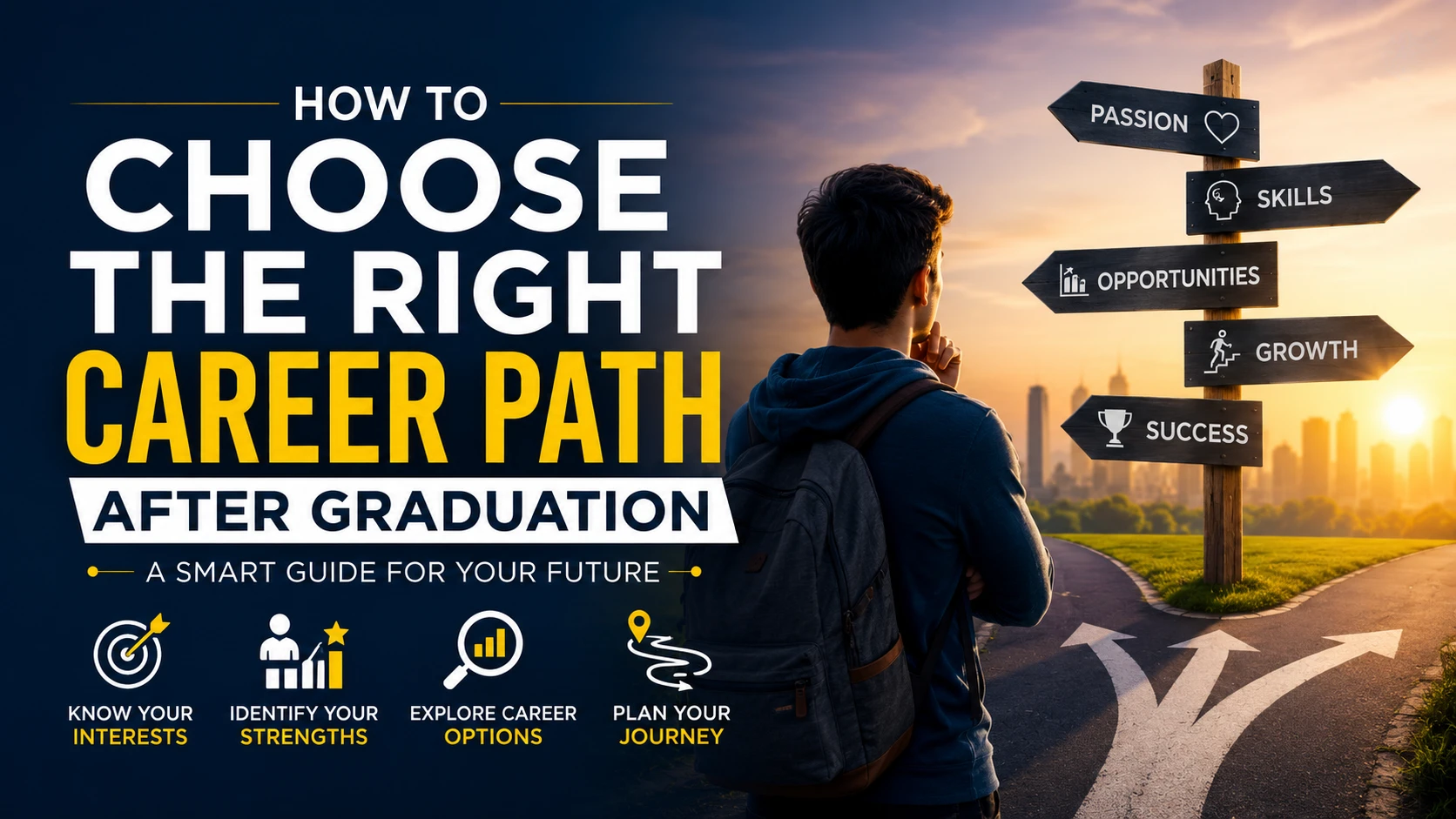
Graduation is one of the biggest turning points in life. For many students, it feels exciting at first because college is finally over. But after a few days, another feeling starts coming into the mind. Confusion.
Questions like these start appearing:
- What should I do now?
- Which career is right for me?
- Should I focus on salary or passion?
- What if I choose the wrong field?
- What careers are safe in the future?
The truth is that most students feel lost after graduation. Some students choose careers because of family pressure. Some follow friends. Others simply enter any job because they are scared of wasting time.
But choosing a career is not something you should do in a hurry. Your career affects your future lifestyle, income, confidence, mental peace, and long term growth. That is why taking smart decisions early becomes very important.
The good thing is that you do not need to figure out your entire life in one day. You just need clarity about the next step.
In this guide, you will learn practical and simple ways to choose the right career path after graduation without feeling overwhelmed.
Understand Yourself Before Choosing Any Career
One of the biggest mistakes students make is choosing a career without understanding themselves first.
Before checking salaries or job trends, you should first understand your own interests, strengths, and personality. A career may look attractive from outside, but if it does not match your personality, you may eventually feel frustrated.
For example, some students enjoy creative work like designing, editing, or content creation. Others enjoy technical problem solving like coding or data analysis. Some people enjoy talking to others and working in teams, while some prefer independent work.
Ask yourself simple questions:
- What type of work excites me?
- Which subjects do I naturally enjoy?
- What kind of work can I do for long hours without getting bored?
- Do I enjoy practical work or theoretical learning?
- What activities make me feel confident?
These questions may look simple, but they help a lot in identifying the right direction.
Many students ignore their natural interests because they think only high salary matters. But in real life, long term success usually comes when skills and interest work together.
Do Not Choose Career Only Because of Trends
Nowadays social media influences career decisions heavily. One day everyone wants to become a software developer. Another day everyone wants to enter AI. Then suddenly everyone starts talking about digital marketing, trading, or content creation.
Following trends blindly is risky.
A career should not be chosen only because it is popular online. Trends change very quickly. What matters more is whether that field matches your strengths and whether you can stay consistent in it.
For example, AI and software development are growing fields, but not every student enjoys programming. Similarly, content creation looks attractive from outside, but it requires patience, creativity, and consistency.
Instead of copying others, focus on finding a field where:
- You can improve continuously
- You enjoy learning
- You can build strong skills
- You see long term growth
A smart career choice is not about looking cool. It is about building a stable and successful future.
Research the Future Scope of Careers
After understanding your interests, the next important step is checking market demand.
Many students enter fields with very limited opportunities because they never researched the job market properly. Before choosing any career, always check:
- Future demand
- Salary growth
- Competition level
- AI impact
- Job availability
- Remote work opportunities
Today, industries are changing very fast because of technology and AI. Some traditional jobs are becoming less valuable, while new career opportunities are growing rapidly.
Currently, some high demand career fields include:
- Artificial Intelligence
- Cyber Security
- Cloud Computing
- Data Analytics
- Digital Marketing
- UI UX Design
- Healthcare
- Finance
- Software Development
This does not mean you must choose only these fields. It simply means you should stay aware of where opportunities are increasing.
A good career usually has three things:
- Personal interest
- Strong skill demand
- Future growth opportunities
When these three things combine together, career growth becomes easier.
Practical Experience Gives Real Clarity
Many students spend months overthinking career decisions without actually trying anything.
The reality is simple. You understand a career properly only when you experience it practically.
For example, a student may think coding is boring until they build their first project. Another student may think marketing is easy until they handle real campaigns.
That is why practical exposure matters a lot.
You can gain clarity through:
- Internships
- Freelancing
- Online courses
- Small projects
- YouTube tutorials
- Networking with professionals
Suppose you are interested in graphic design. Instead of only watching motivational videos, try designing posters or social media graphics for a few weeks. You will quickly understand whether you genuinely enjoy that work or not.
Action removes confusion faster than thinking.
Skills Matter More Than Degree Today
A few years ago, degrees were enough to get jobs easily. But today companies focus more on practical skills.
Many graduates struggle because they depend only on college education without learning industry skills.
No matter which field you choose, skill development should become your priority.
Important skills students should focus on include:
- Communication skills
- Problem solving
- Time management
- Digital skills
- AI tool usage
- Networking
- Critical thinking
Technical skills are important, but soft skills also play a huge role in career growth.
For example, two students may have similar technical knowledge, but the student with better communication and confidence often gets better opportunities.
Avoid Comparing Yourself With Others
Comparison destroys confidence very quickly after graduation.
You may see friends getting jobs, internships, or high salary offers while you still feel confused. This creates pressure and anxiety.
But remember one thing clearly.
Every student has a different background, skill level, learning speed, and career journey.
Some people succeed early. Some take more time. That does not mean you are failing.
Instead of comparing yourself constantly:
- Focus on learning daily
- Improve your skills gradually
- Build practical experience
- Stay consistent
Career growth is a long process, not a one month competition.
Create a Career Roadmap
Once you select a direction, create a simple roadmap for yourself.
Without a roadmap, students waste a lot of time learning random things without progress.
For example, if you want to become a web developer, your roadmap can look like this:
First Phase
- Learn HTML, CSS, and JavaScript
- Build small projects
- Understand basics properly
Second Phase
- Learn frameworks like React or Next.js
- Create portfolio projects
- Improve problem solving
Third Phase
- Apply for internships
- Build resume
- Prepare for interviews
A roadmap gives direction and helps you track improvement.
Stop Waiting for the Perfect Career
One important thing students should understand is that no career feels perfect in the beginning.
Many successful people also started with confusion. They learned through experience and improved over time.
Do not waste years waiting for perfect clarity.
Instead:
- Choose one direction
- Start learning
- Gain practical exposure
- Improve step by step
Clarity comes after action, not before action.
Final Thoughts
Choosing the right career path after graduation can feel difficult, but it becomes easier when you focus on yourself instead of following pressure from others.
Take time to understand your interests, strengths, and future goals. Research career opportunities properly and gain practical experience before making big decisions.
Most importantly, keep learning continuously. The job market changes fast, and students who adapt quickly usually succeed faster.
Your first career choice does not have to define your entire life forever. Many people change careers later and still become successful.
What matters most is starting somewhere and staying consistent.
If you keep improving your skills, building experience, and learning from mistakes, you will eventually create a strong and successful career for yourself.