Career Mistakes Freshers Make After College
5/17/2026, 12:45:33 PM
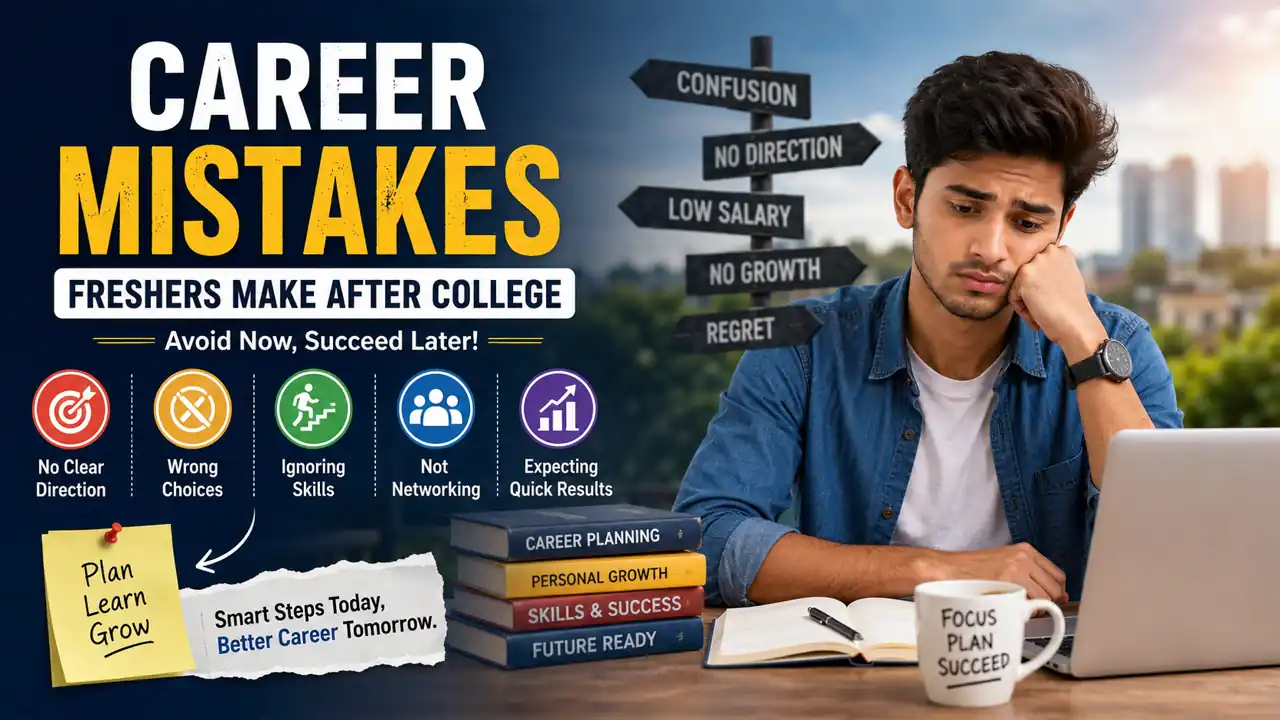
Finishing college feels exciting. After years of assignments, exams, projects, and campus life, entering the professional world looks like the beginning of complete freedom. Many freshers imagine that once they get a degree, opportunities will automatically come their way. But reality is often very different.
The first few years after college are extremely important because they shape long-term career growth, financial stability, confidence, and professional reputation. Small decisions made during this phase can either create strong momentum or lead to years of frustration.
Most freshers are talented and hardworking, but many still make avoidable mistakes simply because nobody teaches them how the professional world actually works. Some focus only on salary, some stop learning after graduation, and others waste valuable time waiting for the “perfect opportunity.”
The good news is that these mistakes can be avoided with awareness and smart planning. Understanding them early can help graduates move faster toward a stable and successful career.
Believing Degree Alone Is Enough
One of the biggest mistakes freshers make is assuming that a college degree automatically guarantees a good job.
A degree is important, but companies today expect much more. Employers look for practical skills, communication ability, problem-solving mindset, adaptability, and sometimes even real-world project experience. Many graduates realize too late that thousands of people have similar qualifications.
This becomes more visible in competitive industries like software development, digital marketing, cybersecurity, design, finance, and data analytics. Recruiters often compare candidates based on skills rather than just academic scores.
Freshers who continue learning after college usually grow faster. Certifications, internships, online courses, freelancing, portfolio projects, and networking can make a huge difference during job applications.
Learning should not stop after graduation. The professional world changes continuously, especially with the rise of AI and automation.
Applying for Jobs Randomly
Many graduates apply to hundreds of jobs without understanding the role, company, or required skills. They use the same resume everywhere and hope for replies.
This approach usually creates disappointment because companies prefer candidates who show relevance and genuine interest.
Instead of applying randomly, freshers should:
- Understand the job description carefully
- Customize resumes for different roles
- Learn the required tools and skills
- Prepare for interviews before applying
- Build projects related to the target role
Focused applications often perform better than mass applications.
For example, a student interested in frontend development should build React or Next.js projects instead of applying for unrelated roles without preparation.
Quality matters more than quantity in job applications.
Ignoring Communication Skills
Technical knowledge alone is not enough in most careers.
Many freshers underestimate the importance of communication. They may know the subject well but struggle during interviews, presentations, meetings, or teamwork.
Good communication does not mean speaking fancy English. It means expressing ideas clearly and confidently.
Companies value employees who can:
- Explain problems properly
- Communicate with clients
- Work in teams
- Write professional emails
- Handle discussions calmly
Poor communication can reduce opportunities even for skilled candidates.
Freshers can improve this by:
- Practicing mock interviews
- Speaking regularly in English
- Reading professional content
- Improving listening skills
- Recording themselves while speaking
Confidence improves gradually with practice.
Chasing Salary Only
Salary matters, especially at the beginning of a career. But focusing only on the highest package can become a major mistake.
Some freshers join companies only because of salary without checking:
- Learning opportunities
- Work culture
- Growth potential
- Skill development
- Job stability
A slightly lower-paying role with strong learning exposure can create much better long-term growth.
Early career years should focus heavily on building valuable skills. Once strong expertise develops, salary growth usually follows naturally.
Many successful professionals started with average salaries but grew quickly because they gained practical experience and industry knowledge.
Comparing Career Growth With Others
Social media has made comparison worse than ever.
Freshers often compare themselves with friends who got high-paying jobs, foreign offers, startup success, or rapid promotions. This creates unnecessary pressure and self-doubt.
The reality is that everyone’s career timeline is different.
Some people succeed early, some later. Some switch industries. Some take time to discover their interests. Comparing journeys only increases stress and reduces focus.
Instead of comparing constantly, graduates should focus on:
- Personal skill growth
- Consistency
- Realistic goals
- Daily improvement
- Long-term planning
A career is usually a marathon, not a race.
Not Building Real Skills
Many freshers spend too much time consuming motivational content but very little time building actual skills.
Watching videos about success is not the same as gaining expertise.
Companies hire people who can solve problems. Real skills come from practice, projects, mistakes, and hands-on learning.
For example:
- Developers should build applications
- Designers should create portfolios
- Writers should publish content
- Marketers should run campaigns
- Analysts should work with real datasets
Skill-based learning creates confidence because it proves practical ability.
The internet already provides affordable learning resources. The challenge is consistency, not availability.
Avoiding Networking
A lot of freshers think networking means asking strangers for jobs. That is not true.
Professional networking simply means building meaningful industry connections.
Many opportunities come through:
- LinkedIn connections
- Alumni networks
- Communities
- Conferences
- Online groups
- Referrals
Freshers who build a professional online presence often discover better opportunities faster.
Simple actions help:
- Keeping LinkedIn profiles updated
- Sharing projects
- Connecting with professionals
- Engaging in industry discussions
- Participating in communities
Networking should focus on learning and relationship building rather than immediate benefits.
Waiting Too Long for the Perfect Job
Some graduates reject every small opportunity while waiting for a dream company.
But long career gaps without learning or practical work can become risky.
The first job does not need to be perfect. It should help build experience, discipline, exposure, and confidence.
Even internships, freelance projects, contract roles, or startup opportunities can provide valuable learning.
Starting somewhere is usually better than staying inactive for years.
Career growth often happens step by step.
Ignoring Personal Branding
Today, recruiters often search candidates online before interviews.
Freshers who have no professional presence may lose opportunities compared to candidates with visible work.
Personal branding does not require becoming an influencer. It simply means showing skills and professionalism online.
This can include:
- A strong LinkedIn profile
- Portfolio websites
- GitHub projects
- Blogs
- Design portfolios
- Certifications
- Case studies
A visible online presence increases credibility.
Even small projects can help demonstrate skills better than resumes alone.
Fear of Rejection
Many freshers stop applying after a few interview rejections.
Rejection is a normal part of professional growth. Almost every successful person has faced failed interviews, rejected applications, and unsuccessful attempts.
The important thing is learning from each experience.
Instead of taking rejection personally:
- Analyze weak areas
- Improve preparation
- Practice interviews
- Upgrade skills
- Keep applying consistently
Persistence matters more than perfection.
Depending Completely on One Career Path
Another common mistake is refusing to explore related opportunities.
For example, someone interested in tech may ignore fields like:
- QA testing
- Cloud support
- Technical writing
- UI/UX design
- Data operations
- DevOps
- Cybersecurity support
Career paths today are flexible. Skills from one domain often transfer to another.
Being open to adjacent opportunities can increase growth chances significantly.
Neglecting Financial Planning
Many freshers start earning but do not learn financial discipline.
Poor spending habits early in life can create long-term stress.
Basic financial awareness is extremely important:
- Saving regularly
- Avoiding unnecessary debt
- Creating emergency funds
- Learning investments slowly
- Tracking expenses
Financial stability improves career confidence because people can make better decisions without panic.
Not Taking Mental Health Seriously
The transition from college to professional life can feel overwhelming.
Job pressure, uncertainty, rejection, family expectations, and comparison can affect mental health.
Ignoring stress completely can reduce productivity and confidence.
Freshers should maintain balance by:
- Taking breaks
- Exercising regularly
- Talking to supportive people
- Avoiding excessive comparison
- Maintaining healthy routines
Career success becomes more sustainable when mental well-being is protected.
Final Thoughts
The years immediately after college are full of learning experiences. Mistakes will happen, and that is completely normal. What matters most is learning quickly and adapting early.
Freshers who focus on continuous learning, practical skills, communication, networking, and consistency usually create stronger career foundations. Success rarely happens overnight, but steady improvement can produce powerful long-term results.
Instead of chasing shortcuts, graduates should focus on becoming valuable professionals. Companies, clients, and opportunities naturally move toward people who continuously improve themselves.
A career is built one decision at a time. The earlier freshers avoid these common mistakes, the faster they can move toward stability, growth, and long-term success.